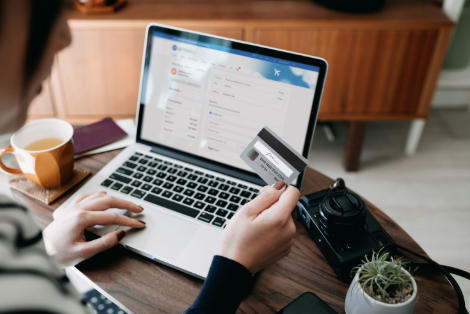
Blockchain-enabled secure payments reframe trust by embedding verifiable records into transaction flows, enabling faster settlement and cross-border transfers with auditable privacy. Decentralization enhances resilience, reducing single points of failure and enabling consensus-driven governance. Real-world adoption hinges on scalable rails, interoperable standards, and robust privacy controls, alongside secure wallets and efficient layer-two solutions. Together, these factors could reshape payment ecosystems—yet the path to widespread use invites careful navigation of regulation, interoperability, and user-centric design.
What Blockchain Changes in Secure Payments Mean
Blockchain reshapes secure payments by decoupling trust from intermediaries and embedding verifiable records directly into transaction flows. The result is streamlined settlement, reduced counterparty risk, and transparent auditability. Privacy preserving features can protect user identities while maintaining verifiability. Cross border capabilities enable faster, cheaper international transfers, fostering financial inclusion and strategic competition, as institutions reconfigure compliance, liquidity, and interoperability for a global digital economy.
How Decentralization Strengthens Trust in Transactions
Decentralization strengthens trust in transactions by distributing authority across a network, eliminating single points of failure, and enabling consensus-based verification. In this framework, decentralized governance coordinates participants, while cryptographic proofs underpin trustless verification, reducing reliance on intermediaries. This approach fosters transparent incentives, resilience, and auditable outcomes, shaping a future where secure payments align with principled autonomy and scalable, participatory liberty.
Overcoming Real-World Barriers: Scalability, Regulation, and Adoption
To advance secure payments beyond theory, the real-world barriers of scalability, regulatory complexity, and user adoption must be addressed with a disciplined, system-wide perspective.
The analysis highlights blockchain adoption and interoperability standards as critical, balancing regulatory compliance with privacy considerations.
Address scalability challenges via scalable payment rails and on chain/off chain settlement, preserving consumer protections and clarity across ecosystems.
Practical Pathways for Consumers and Businesses to Use Secure Payments on Blockchain
What practical pathways enable consumers and businesses to use secure payments on blockchain in a way that scales, protects privacy, and preserves compliance?
Institutions should promote secure wallets with standardized recovery processes, enabling seamless key recovery and minimizing loss risk.
Emphasize transaction privacy through selective disclosure and privacy-preserving tooling, while pursuing fee optimization via scalable networks and interoperable layer-two solutions that uphold regulatory clarity.
Frequently Asked Questions
What Are the Privacy Implications of Blockchain Payments for Individuals?
The privacy concerns center on persistent pseudonymity and data exposure risks; data sovereignty remains contested. Cryptography limitations persist, while network scalability influences traceability, enforcement, and user control; analysts forecast evolving standards to balance liberty with accountability.
How Do Costs of Blockchain Transactions Compare to Traditional Payments?
Transaction costs vary: on-chain fees can spike with congestion, while traditional payments incur interchange and processing charges; overall, blockchain may lower some merchant tooling costs but privacy implications persist, guiding settlements, fraud fixation, and near-real-time on-chain data ownership considerations.
Can Blockchain Fix Fraud Beyond Cryptography and Authentication?
Blockchain cannot fully fix fraud beyond cryptography and authentication, but it informs fraud prevention within evolving trust architecture; scalability challenges and off chain settlement considerations shape how robust, scalable controls can be designed for proactive risk management.
What Ownership Rights Exist Over Data Stored On-Chain?
Whispers of a ledger hint at variable data ownership; on chain rights depend on contract, consent, and jurisdiction, while privacy implications linger, transaction costs rise, and fraud beyond cryptography persists, guiding merchant tools toward transparent, freedom-minded governance.
See also: How Artificial Intelligence Is Changing Businesses
How Can Small Merchants Access User-Friendly Blockchain Payment Tools?
Small merchants can access user-friendly blockchain tools through streamlined onboarding protocols and integrated wallets, enabling frictionless payments. The focus remains on merchant onboarding efficiency and user experience, delivering scalable, secure solutions that empower independent operators and preserve financial autonomy.
Conclusion
Blockchain-enabled secure payments promise faster settlements, cross-border reach, and transparent audit trails, underpinned by cryptographic privacy and resilient decentralization. As scalable rails and interoperable standards mature, widespread adoption becomes feasible for consumers and businesses alike. Regulatory clarity and robust wallet security will be pivotal, while layer-two solutions curb costs without compromising trust. In this evolving landscape, the industry is poised to redefine trusted transactions—step by step, the groundwork is being laid, and the future is within reach. Time will tell, as momentum builds.